In the dynamic world of professional kitchens, where efficiency, precision, and safety are paramount, the choice of culinary tools significantly impacts a chef’s workflow. While the formidable cleaver has long held a revered, almost iconic status for its brute force, a growing number of professional chefs are now finding themselves reaching for the versatile kitchen shear. This shift isn’t a dismissal of the cleaver’s power, but rather a recognition of the modern shear’s superior control, safety, and adaptability for a wider array of daily tasks, streamlining operations and elevating culinary artistry.
The Enduring Power of the Cleaver: When Brute Force Reigns
For centuries, the cleaver has been the quintessential tool for heavy-duty butchery, a testament to its raw power and unwavering strength. Its broad, heavy blade is purpose-built to break down large cuts of meat, hack through thick bones, and sever tough cartilage with decisive impact. In kitchens that handle whole carcasses or robust bone structures for stocks and broths, a meat cleaver remains an undeniably effective instrument, leveraging sheer momentum to accomplish tasks that would dull or damage more delicate knives.
However, it’s crucial to distinguish between the heavy-duty meat cleaver and its lighter, more versatile cousin, the Chinese vegetable cleaver. The latter, often referred to as a “Chinese chef’s knife,” is remarkably agile, designed for slicing, dicing, mincing, and even crushing garlic, acting as a multi-purpose tool for everyday prep. Despite this versatility, even the Chinese cleaver often falls short in areas where modern kitchen shears truly shine. The traditional meat cleaver, in particular, with its focus on blunt force over razor-like precision, often struggles with intricate cuts and delicate ingredients. Modern professional butchers, for instance, have largely moved towards band saws and hand saws for cleaner, quicker bone work, highlighting the cleaver’s limitations in specialized, high-volume operations. The very weight and design that give it power also make it cumbersome for extended use or tasks requiring a nuanced touch, limiting its role in the contemporary, fast-paced kitchen.
The Rise of Kitchen Shears: Precision, Safety, and Versatility
The ascension of kitchen shears in the professional arena is no accident; it’s a testament to their inherent advantages in control, safety, and adaptability. These specialized scissors have evolved into indispensable tools, offering capabilities that knives, including cleavers, often cannot match.
Enhanced Control and Safety
Table is empty.One of the most compelling reasons chefs favor shears is the superior control they offer. Unlike a knife, which requires a stable cutting surface and a precise grip on the handle and food, shears encapsulate the ingredient between two blades, providing a stable cutting action. This design allows for intricate work, such as trimming excess fat from meat, snipping herbs directly into a dish without bruising, or expertly portioning ingredients. The direct, scissor-like action greatly reduces the risk of slippage, a critical safety benefit when working with raw, often slippery, ingredients like poultry. “When you’re breaking down a whole chicken, the last thing you want is a knife sliding off a wet surface,” notes Chef Antoine Dubois, head of a Michelin-starred kitchen. “Shears give you a confident grip and a clean cut, minimizing accidents.” This enhanced control not only boosts safety but also allows for more precise, aesthetic cuts that are often challenging to achieve with a traditional knife.
Unmatched Versatility Beyond Poultry
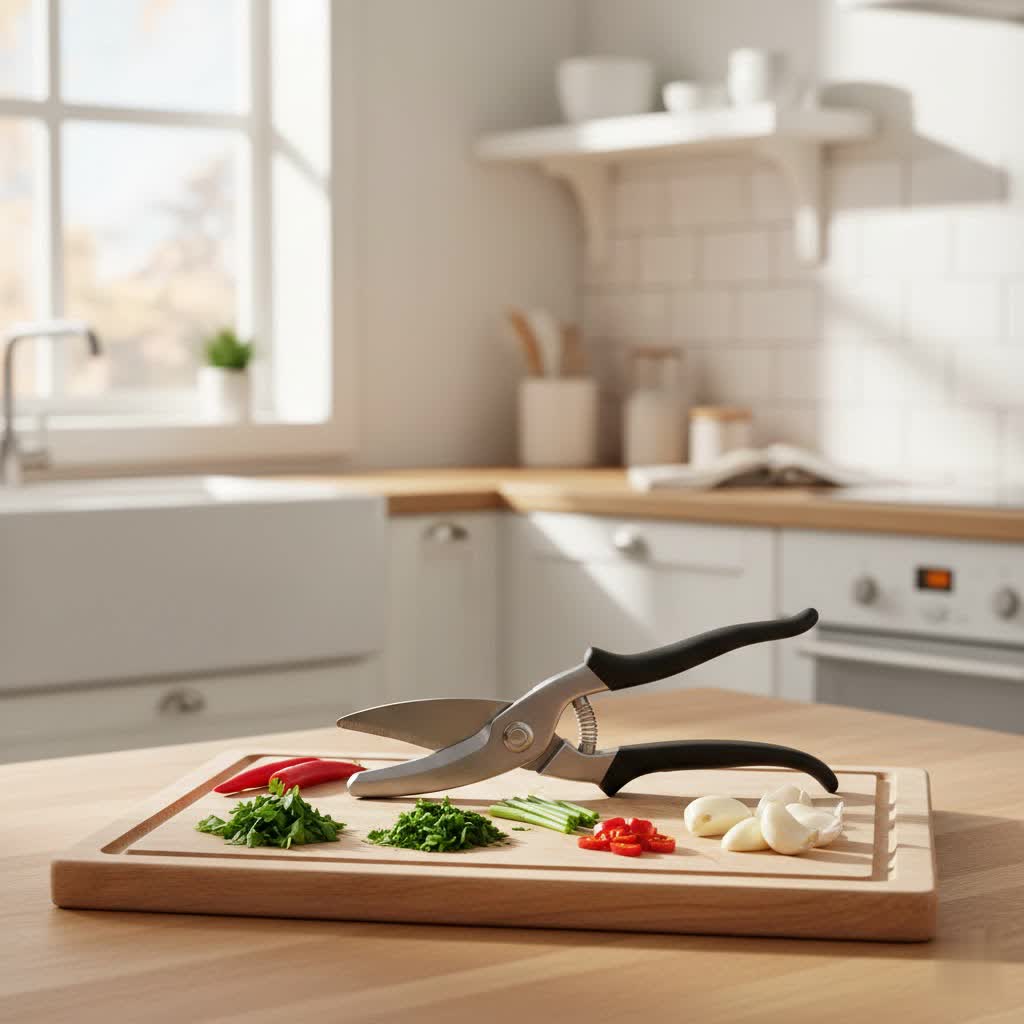
While often associated with poultry, kitchen shears are remarkably versatile, proving invaluable across a spectrum of culinary tasks. They excel at processing delicate herbs and leafy greens, allowing for quick, bruise-free snipping directly into a bowl or pot. Beyond fresh produce, shears are adept at cutting pastry dough into intricate shapes, sectioning pizza or flatbreads with ease, and even opening stubborn food packaging—tasks that would either dull a chef’s knife or require an additional, less efficient tool. Their ability to reach into tight spaces and perform cuts without the immediate need for a cutting board further streamlines prep, enhancing a chef’s speed and efficiency. From trimming bacon into neat strips to cutting twine for trussing roasts, the shear’s adaptability reduces the need for multiple specialized gadgets, consolidating functionality into one indispensable tool.
Efficiency and Knife Preservation
In a bustling professional kitchen, time is currency, and every second saved contributes to a smoother service. Kitchen shears significantly contribute to operational efficiency by speeding up specific preparation tasks. Spatchcocking a chicken, for instance, becomes a much quicker and less strenuous affair with a robust pair of shears capable of cutting through bone and cartilage along the backbone. This efficiency extends to simpler tasks, where the rapid, controlled snip of shears can outperform the setup and execution required for a knife and cutting board. Moreover, delegating tougher tasks to shears protects a chef’s more delicate, razor-sharp knives. Using a high-quality chef’s knife to hack through bones or tough joints is a surefire way to chip or dull its edge. Shears absorb this impact, preserving the integrity and sharpness of other essential blades and reducing the frequency of sharpening, thereby saving both time and maintenance costs.
Cleaver vs. Shears: A Task-Oriented Showdown in the Professional Kitchen
Understanding the distinct strengths of both tools reveals why chefs often integrate both into their arsenal, though with a clear preference for shears in many common applications.
| Feature | Kitchen Shears | Meat Cleaver |
|---|---|---|
| Primary Function | Precision cutting, trimming, snipping, light bone removal | Heavy chopping, breaking down large bones, splitting tough cuts |
| Control & Safety | High control, reduced slippage, ergonomic grip | Lower control for fine tasks, higher risk of injury due to blunt force |
| Versatility | Excellent for herbs, poultry, pastry, packaging, light butchery | Specialized for heavy-duty meat and bone work; some vegetable cleavers are versatile for slicing |
| Precision | High, ideal for intricate cuts and delicate ingredients | Low, not suited for fine slicing or delicate tasks |
| Efficiency | Speeds up poultry breakdown, herb prep, quick cuts in pan | Efficient for large-scale bone chopping, but slower for fine work |
| Blade Preservation | Protects other knives from heavy bone/joint work | Primary tool for tasks that would damage other knives |
| Cleaning | Many designs allow for easy disassembly and thorough cleaning | Generally one-piece, can be harder to clean around handle for sanitation |
For tasks like breaking down poultry, shears undeniably excel. They navigate joints and bone structures with less effort and greater safety than a knife, which can slip. “For spatchcocking a turkey, shears are simply a game-changer,” says Chef Elena Petrova, known for her innovative use of modern kitchen tools. “You get clean cuts along the backbone without the wrestling match you’d have with a cleaver.” When it comes to chopping hard vegetables or splitting smaller bones for stock, a Chinese cleaver can be effective, but for raw poultry, the ergonomic advantage and grip of shears often prevail. Meanwhile, fine slicing, julienning, and mincing delicate ingredients still remain the domain of a well-honed chef’s knife, highlighting that each tool plays a complementary role in a complete culinary setup.
Choosing the Right Tool for the Job: A Chef’s Perspective
The modern professional kitchen is about making informed choices that optimize output, safety, and quality. When selecting kitchen shears, chefs prioritize high-quality stainless steel blades for durability and hygiene, often with micro-serrations to grip slippery foods. Ergonomic handles are essential for comfort during prolonged use, and a take-apart design ensures thorough cleaning and sanitation, preventing bacterial buildup. For cleavers, heavy, well-balanced models made from robust steel are preferred for their intended purpose of bone-splitting.
Ultimately, the choice isn’t about one tool completely replacing another, but rather about understanding their respective strengths and integrating them into a comprehensive, efficient workflow. Many chefs maintain both a trusted chef’s knife and a high-quality pair of kitchen shears as their core cutting tools, reserving the cleaver for very specific, heavy-duty applications. “A truly skilled chef knows when to use a scalpel and when to use a hammer,” quips Chef Marcus Thorne, an advocate for specialized tools. “Shears are often the scalpel for precision and ease, while a cleaver is the hammer for when brute force is truly necessary.”
The preference for kitchen shears among professional chefs stems from their ability to offer precision, enhance safety, provide unmatched versatility, and contribute to overall kitchen efficiency. While the cleaver retains its place for tasks requiring sheer power, shears have emerged as the agile, adaptable workhorse, embodying the evolution of culinary technique and tool design. For any chef looking to optimize their kitchen performance, investing in a high-quality pair of shears is not just an upgrade, but a smart strategic move. How might these versatile tools transform your daily culinary routine?
Frequently Asked Questions
Are professional kitchen shears dishwasher safe?
Many high-quality kitchen shears are designed to be dishwasher safe, especially those that can be taken apart. However, always check the manufacturer’s instructions, as hand washing often prolongs their sharpness and overall lifespan, particularly for models with intricate features or specialized coatings.
Can kitchen shears cut through bones?
Yes, robust kitchen shears, often called Poultry Shears, are specifically designed with strong, sharp blades to cut through poultry bones and cartilage. They excel at tasks like spatchcocking a chicken, where precision is needed to navigate around the spine and ribs.
Why do some chefs still use cleavers?
Chefs continue to use cleavers primarily for heavy-duty tasks that require significant force, such as breaking down very large bones, chopping through dense cuts of meat, or even crushing ingredients like garlic. For these specific applications, the cleaver’s weight and robust design remain highly effective.
What are the main advantages of shears over a knife for poultry?
Shears offer superior control and safety when cutting slippery raw poultry, reducing the risk of accidental slips common with knives. They can also navigate joints and bones more easily and precisely, leading to cleaner cuts and more efficient breakdown of the bird.
How do I maintain and sharpen kitchen shears?
To maintain kitchen shears, always clean them immediately after use with warm, soapy water and dry them thoroughly to prevent rust. Sharpening can be done using a specialized scissor sharpener or by a professional, typically less frequently than a chef’s knife, depending on usage.