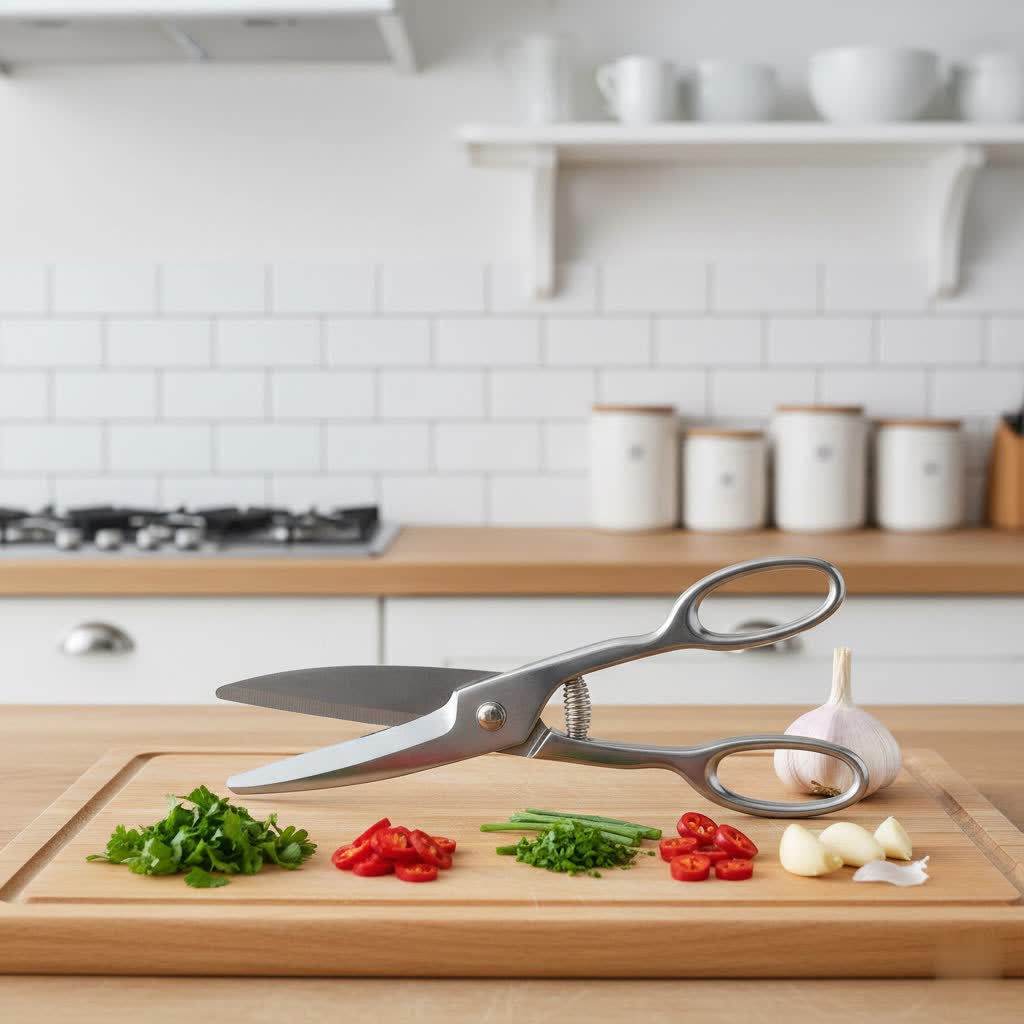
Poultry shears are an indispensable tool in any kitchen, making quick work of tough bones and skin. But what happens when that crucial spring, responsible for their effortless action, decides to get stuck? A sticky or jammed spring can turn a simple task into a frustrating chore, hindering your efficiency and even posing a safety risk. Fortunately, a stuck spring often doesn’t mean the end for your beloved shears. With a bit of patience and the right approach, you can restore them to their former glory right in your own kitchen. This comprehensive DIY guide will walk you through the common culprits behind a stuck spring and provide practical, step-by-step solutions to get your poultry shears cutting smoothly again.
Why Your Poultry Shears’ Spring Might Be Stuck
Understanding the root cause is the first step toward a successful repair. A stuck spring in your poultry shears can stem from a few common issues, each requiring a slightly different fix.
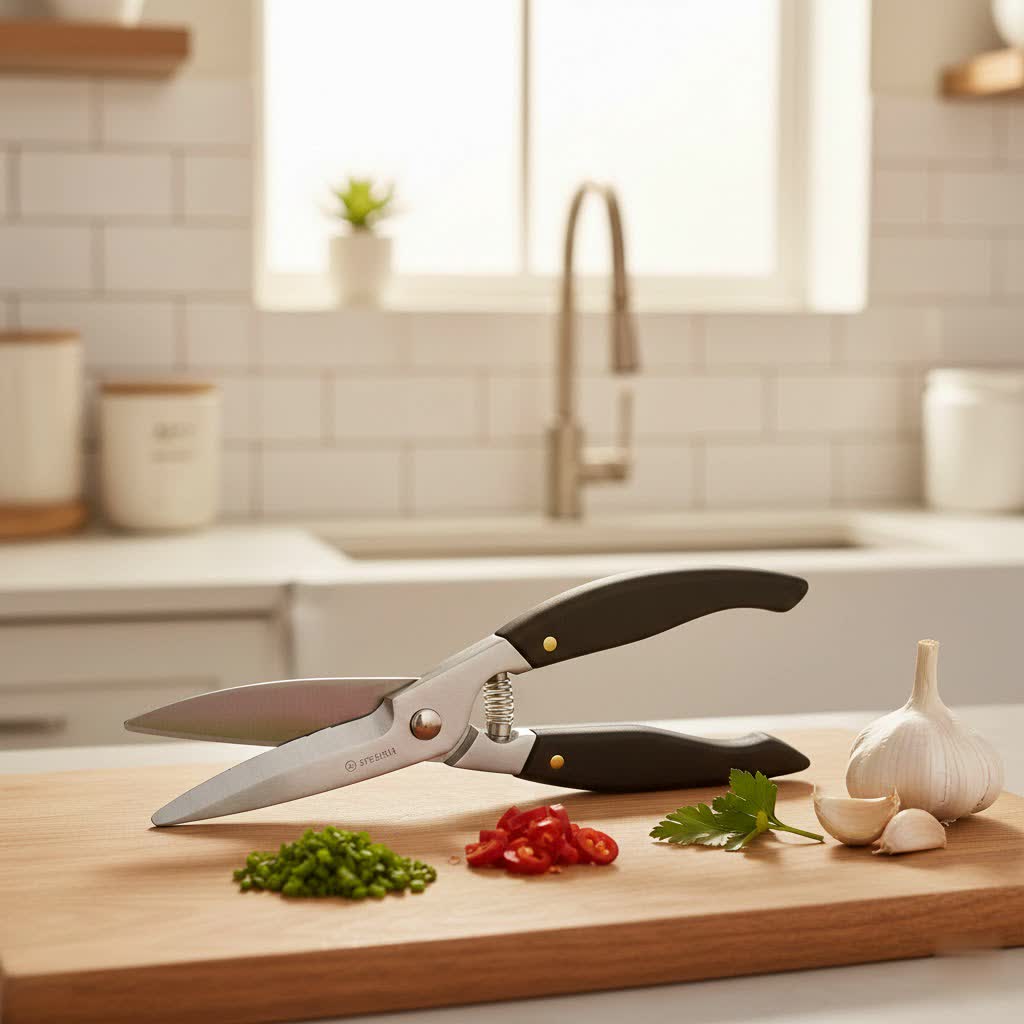
One of the most frequent reasons is the accumulation of food debris, grease, or sticky residues. Over time, bits of poultry, fat, and marinade can dry and harden within the pivot point and around the spring mechanism, creating friction or outright jamming the spring’s movement. Another common factor is misalignment of the blades or the spring itself. A slight shift in the pivot screw’s tightness or a bent component can cause the blades to bind or the spring to sit improperly, preventing it from extending or retracting smoothly. Less commonly, but still possible, are spring fatigue or damage, where the metal spring loses its elasticity or breaks, or rust, which can seize moving parts and corrode the spring. Identifying whether the issue is grime, a structural problem, or a damaged spring will guide your repair efforts.
Essential Tools for the Repair
Before you dive into the repair process, gather a few basic tools. Most of these can be found in a typical household, ensuring this remains a true DIY project.
You’ll need dish soap and warm water along with a small brush or cloth for thorough cleaning. For adjustments, a small screwdriver (either Phillips or flathead, depending on your shears’ fasteners) is often necessary. A food-grade lubricating oil will be vital for smooth operation after cleaning and adjustment. In some cases, if the spring needs to be reshaped or re-seated, a pair of pliers (preferably smooth-jawed to avoid marring the metal, or wrapped with tape for protection) might come in handy. Always ensure your workspace is well-lit and clean, and keep a paper towel or rag nearby for wiping away grime and excess oil.
Step-by-Step DIY Guide to Fix a Stuck Spring
Restoring your poultry shears requires a methodical approach, ensuring both effectiveness and safety. Follow these steps carefully to diagnose and resolve the issue.
Safety First
|
Our Picks for the Best Poultry shears in 2026
As an Amazon Associate I earn from qualifying purchases.
|
||
| Num | Product | Action |
|---|---|---|
| 1 | DRAGON RIOT Heavy Duty Poultry Shears - A Must Have Kitchen Shears for Chicken and Meat Cutting - Dishwasher Safe and Stainless Food Kitchen Scissors for Thanksgiving |

|
| 2 | Poultry Shears – Heavy Duty Kitchen Shears & Multipurpose Kitchen Scissors for Meat, Chicken, Fish & Vegetables, High Carbon Stainless Steel, Safety Lock, Dishwasher Safe |
|
| 3 | Gisde Heavy Duty Poultry Shears Kitchen Shears for Food Kitchen Scissors All Ppurpose Heavy Duty Scissors for Chicken, Meat, Bone, Poultry, Spring Loaded, Dishwasher Safe |
|
| 4 | WÜSTHOF Come Apart Kitchen Shears |
|
| 5 | Poultry Shears, Heavy Duty Kitchen Shears With Anti-Slip Handle & Safety Lock, Poultry Scissors for Meat, Chicken, Bone,Turkey, Fish, Spring Loaded, Dishwasher Safe |
|
| 6 | OXO Good Grips Spring-Loaded Poultry Shears, Black |
|
| 7 | MAD SHARK Professional Heavy Duty Poultry Shears - Kitchen Shears for Spatchcocking Chicken and Meat Cutting, Multi-Purpose Kitchen Scissors for Food, Spring-loaded (Red) |
|
| 8 | KitchenAid All Purpose Kitchen Shears with Protective Sheath Durable Stainless Steel Scissors, Dishwasher Safe, Soft Grip Comfort Handle, 8.72 Inch, Black |
|
| 9 | HUUSK Kitchen Scissors All Purpose - Stainless Steel Kitchen Shear, Sharp Silver Meat Scissors Dishwasher Safe, Heavy Duty Poultry Shears, Japanese Cooking Scissor for Food, Christmas Gifts for Women |
|
| 10 | HENCKELS Kitchen Shears for Poultry, Dishwasher Safe, Heavy Duty, Stainless Steel 4-Inch |
|
Before you begin any work on your shears, prioritize safety. Poultry shears have sharp blades that can cause serious injury. Always handle them with extreme care, keeping your fingers away from the cutting edges. If possible, wear cut-resistant gloves. Work slowly and deliberately, and never force any components, as this can lead to further damage or personal injury.
Initial Assessment and Thorough Cleaning
Begin by visually inspecting your shears. Look for any obvious signs of damage, rust, or heavy residue buildup around the pivot, blades, and especially the spring mechanism. Pay close attention to how the spring is seated.
Once your assessment is complete, it’s time for a deep clean. Fill a basin with warm, soapy water using standard dish soap. Carefully wash the entire shears, focusing on scrubbing away any caked-on food particles, grease, or sticky substances from the blades, handles, and particularly the spring and pivot area. A small brush (like an old toothbrush) can be effective for reaching tight spots. Rinse the shears thoroughly under running warm water to remove all soap residue. It’s crucial to dry them completely immediately after washing to prevent rust. You can use a clean towel, and for intricate areas, a hairdryer on a low setting can help evaporate moisture. After drying, try operating the shears to see if the spring issue persists. Often, a good cleaning is all that’s needed to free a stuck spring.
Addressing Misalignment or Minor Jams
If cleaning alone didn’t resolve the problem, the spring might be stuck due to slight misalignment or a hidden jam. Gently open the shears as wide as they will go. Carefully inspect the area where the blades meet and pivot, as well as where the spring engages with the handles.
Sometimes, a tiny piece of bone, cartilage, or even a hardened spice particle can get lodged in the mechanism. Try spreading the blades apart slightly with your fingers while slowly closing and opening them, feeling for any catching points. You might need to repeatedly open them fully, spread the blades a tiny bit, and then close them, allowing the motion to dislodge any obstructions. If you feel a specific point where they’re catching, gently pinch that area with your fingers while working the shears open and closed. Repeat this motion several times, testing the action frequently, until the catching subsides and the spring moves freely.
Dealing with a Popped-Out or Misaligned Spring
In some poultry shears, the spring is designed to be removable or can become dislodged. If your spring has popped out, or you suspect it’s not seated correctly, you may need to manipulate it.
First, identify how the spring is meant to sit within the shears’ handles. Many springs simply fit into specific grooves or against a designated stopping point. If the spring is entirely out, carefully reinsert it into its correct position. For springs that constantly pop out, a common issue is that the spring itself has slightly deformed. Using your (taped) pliers, very gently and gradually bend the spring slightly to encourage it to sit more snugly against the metal of the shear blade or handle when reinstalled. The goal is to create just enough tension for it to stay in place without impeding its function. Reinstall the spring and test the action. Make small adjustments, taking care not to overbend the metal, as this could weaken or break it.
Adjusting Spring Tension (if applicable)
Some high-quality poultry shears feature an adjustable pivot screw that controls the blade tension, which can indirectly affect spring performance. If your shears have such a screw (often a Phillips or flathead screw at the pivot point), you might be able to fine-tune it.
Before adjusting, note the current position. Using a suitable screwdriver, turn the screw a quarter-turn counter-clockwise to slightly loosen it. Test the shears’ action. If the spring movement improves, you’ve found a good starting point. Be careful not to loosen it too much, as this can make the blades wobbly and unsafe. Conversely, if the blades feel too loose and the spring isn’t returning with enough force, you can try tightening the screw a tiny bit. The aim is to find a balance where the blades glide smoothly, the spring returns effectively, and there’s no excessive play. Always make small, incremental adjustments and test after each turn.
Lubrication and Final Test
Once you’ve cleaned, adjusted, and re-seated any components, the final step is lubrication. This reduces friction, ensures smooth operation, and helps protect against rust.
Apply a small drop or two of food-grade mineral oil (or a cooking oil like olive oil, though mineral oil is preferred for longevity) to the pivot point of the shears and around where the spring engages. Open and close the shears repeatedly to work the oil into all the moving parts. Wipe away any excess oil with a clean cloth. The shears should now open and close with ease, and the spring should provide a consistent, smooth return. Perform a final test cut on some poultry skin or a piece of paper to ensure optimal performance.
Preventative Maintenance to Avoid Future Issues
A little proactive care can save you a lot of hassle in the long run. Establishing a routine for your poultry shears will keep them in top working condition and prevent the spring from getting stuck again.
Firstly, always clean your shears immediately after each use. Don’t let food debris dry and harden on the blades or in the mechanism. A quick wash with warm, soapy water is usually sufficient. Secondly, ensure they are completely dry before storing. Moisture is the enemy of metal and a prime cause of rust, which can seize up the spring and pivot. A towel dry followed by air drying, or even a quick blast with a hairdryer, is recommended. Thirdly, apply a light coat of food-grade lubricant periodically, especially if the shears see frequent use or are stored for extended periods. This keeps the moving parts smooth and protected. Lastly, store them properly in a knife block, a drawer organizer, or with a blade guard to prevent damage and keep them clean.
When to Consider Replacement
While many issues can be fixed with a DIY approach, there comes a point where replacement is the more practical and safer option.
If the spring itself is visibly broken, cracked, or severely deformed beyond simple reshaping, it might be time to invest in a new pair. Similarly, if the blades are heavily pitted with rust that affects their cutting ability, or if the pivot joint is irrevocably loose, preventing any effective cutting, continued use can be ineffective and potentially dangerous. Sometimes, the cost and effort of repairing severely damaged shears outweigh the benefit, especially for older, lower-cost models. Consider the age of your shears and the extent of the damage. A new, high-quality pair of poultry shears can be a worthwhile investment for the safety and efficiency they bring to your kitchen tasks.
Conclusion: Choosing the Right Poultry Shears for Your Needs
A stuck spring in your poultry shears is a common problem that doesn’t have to lead to an immediate replacement. By understanding the causes, gathering a few basic tools, and following a systematic DIY guide, you can often restore your shears to full functionality. Remember the importance of thorough cleaning, careful inspection, and targeted adjustments, along with the crucial step of lubrication. Regular preventative maintenance, including prompt cleaning and proper storage, will significantly extend the lifespan of your shears and ensure they’re always ready for your next culinary adventure. Don’t let a minor mechanical hitch derail your kitchen efficiency; empower yourself with these repair skills. What small kitchen repair have you tackled recently that brought new life to an old tool?
Frequently Asked Questions
How do I prevent rust on my poultry shears?
To prevent rust, always wash your poultry shears immediately after use with warm, soapy water. Crucially, dry them thoroughly with a clean towel and allow them to air dry completely before storing. Applying a thin coat of food-grade mineral oil to the blades and pivot point periodically can also provide an additional layer of protection against moisture.
Can I sharpen my poultry shears at home?
Yes, many poultry shears can be sharpened at home. For minor dullness, cutting through several layers of aluminum foil can help realign the edges. For a more precise sharpening, you can use a kitchen knife sharpener with a suitable slot for shears, or a sharpening stone at the correct angle. Always refer to your shears’ manufacturer guidelines for the recommended sharpening method.
What kind of lubricant is safe for kitchen tools like poultry shears?
For kitchen tools that come into contact with food, it’s essential to use a food-grade lubricant. Food-grade mineral oil is a popular and safe choice, as it’s non-toxic and won’t impart flavors. Some cooking oils like olive oil can also be used, but mineral oil is generally preferred for its stability and longer-lasting protective qualities.
My poultry shears feel too loose after fixing the spring. What should I do?
If your shears feel too loose, it might indicate that the pivot screw needs slight tightening. Locate the screw at the pivot point and, using the appropriate screwdriver, turn it clockwise in very small increments (e.g., quarter turns). After each small adjustment, test the shears’ action to ensure they close smoothly without excessive wobbling and the spring returns effectively. Be careful not to overtighten.